Content
Course Content is a powerful feature in ampEducator that lets you build your entire course directly in the system. Within the Content tab, you can organize your outline with units and sections, then add everything students need to complete the course — including documents, text lessons, videos, resource links, assignments, tests, and evaluations.
This makes it possible to deliver a fully structured course online, with all materials and assessments integrated in one place. Students can work through the content step by step, submit assignments, launch tests, and track their progress right from the Student Portal.
Enabling LMS Content
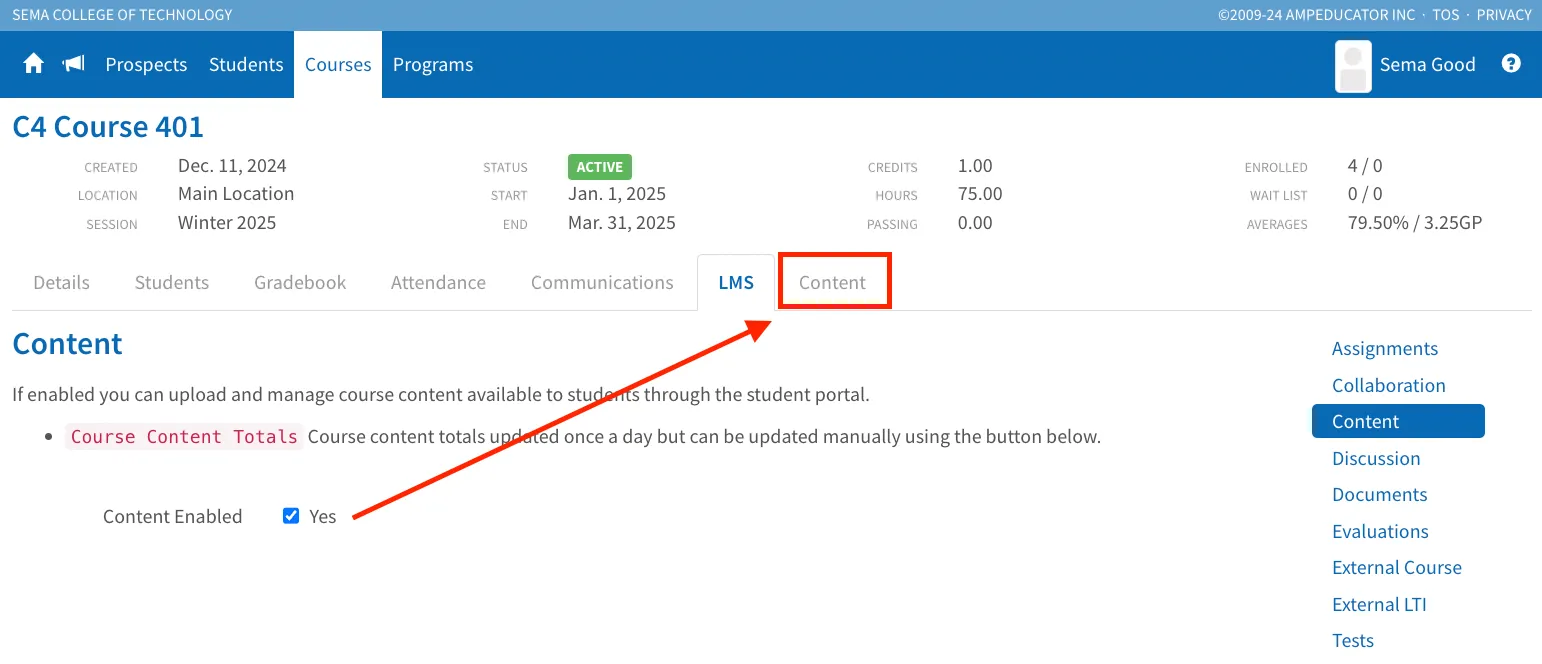
To get started, you first need to enable Course Content for your course. Go to the LMS tab within the course and turn on Course Content. Once enabled, a new Content tab will appear, where you can begin structuring your course with units, sections, and content items.
Engagement Tracking in Course Content
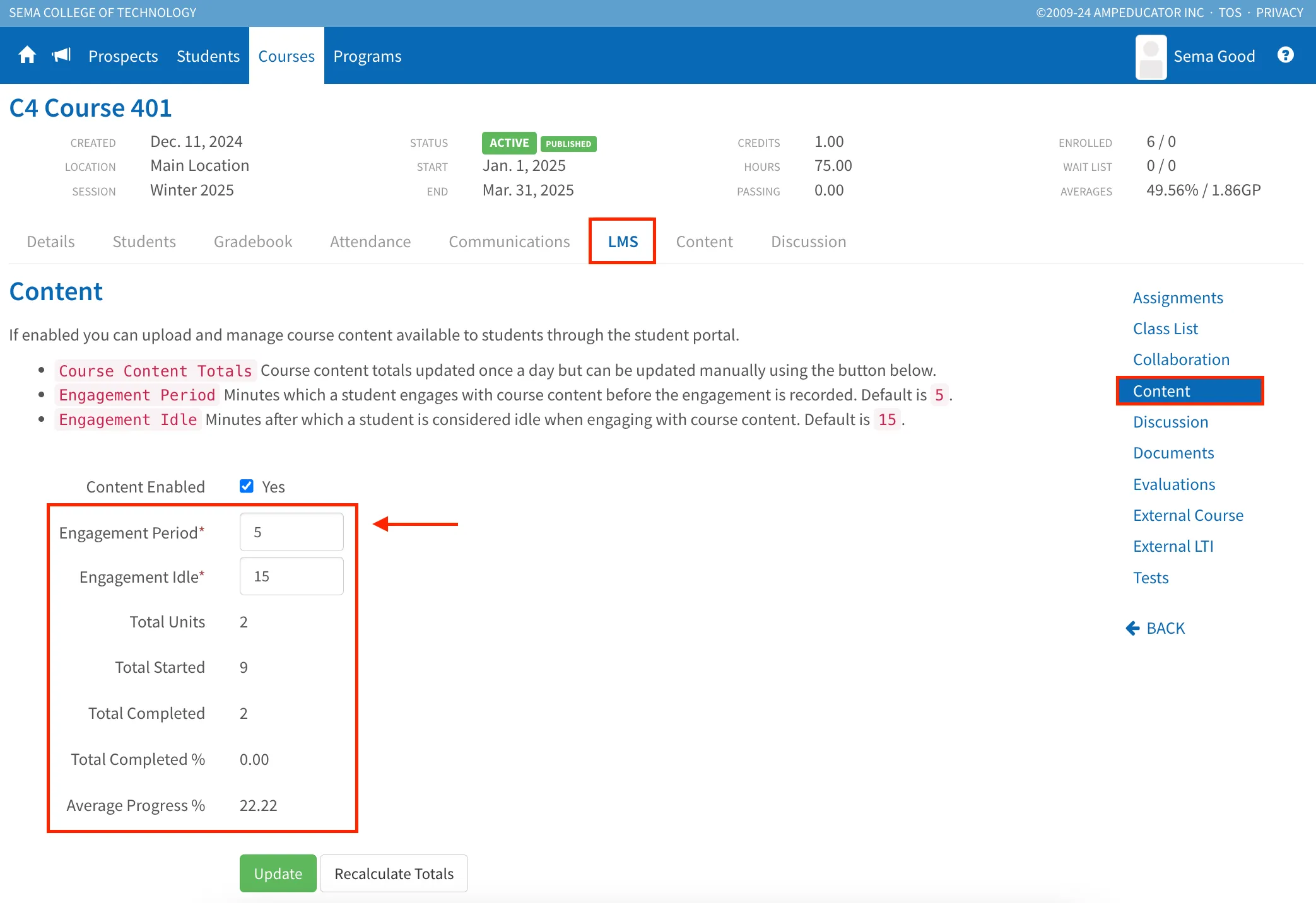
When you enable Course Content, a section appears underneath with engagement tracking settings. This feature helps measure how Students interact with LMS content, making it easier to monitor progress in asynchronous or self-paced courses.
Engagement Period
This setting defines how long a Student must actively engage with course content before that engagement is recorded. For example, if it's set to 5, the system will only track engagement once the Student has been active for a full 5 minutes.
Engagement Idle
This setting defines how long a Student can be inactive before the system stops tracking engagement time. If there's no interaction within the set number of minutes, a popup will appear asking the Student if they are still there.
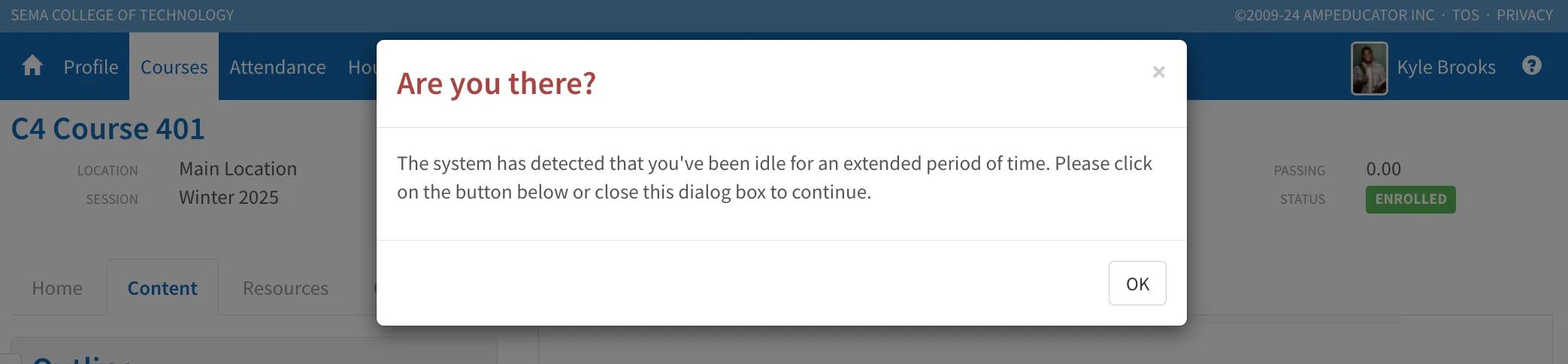
At that point:
- Engagement tracking pauses
- The Student must confirm they are still present by clicking OK
- Once confirmed, engagement tracking resets and begins again
This helps ensure that progress is only recorded when the Student is actively engaging with course content, rather than leaving the window open and unattended.
Course Content Totals
Below the engagement settings, you’ll see real-time stats showing how many content units are available, how many have been started or completed, and overall progress percentages across all enrolled Students. You can manually refresh these totals at any time by clicking Recalculate Totals.
Course Content Settings
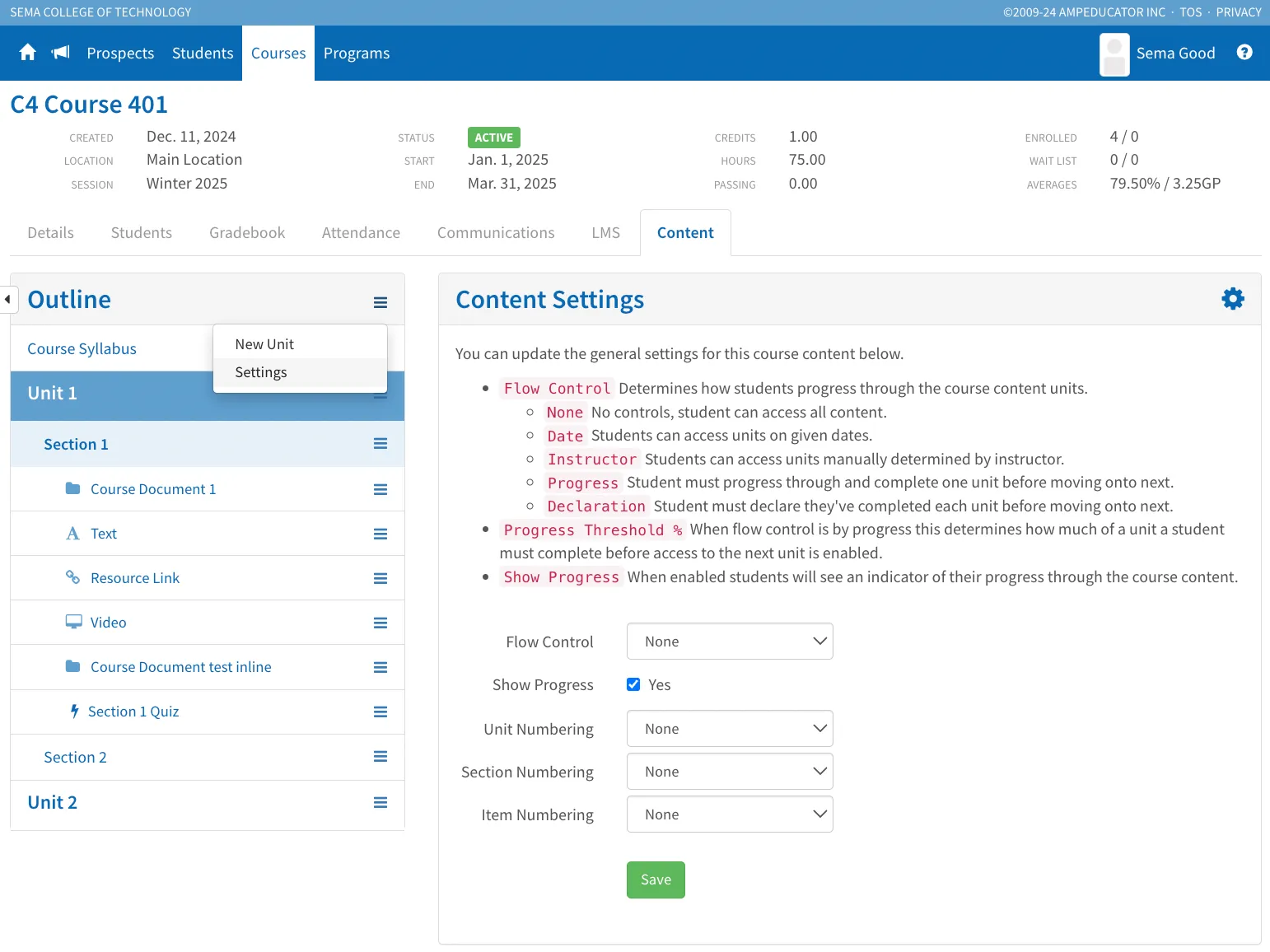
To access your course content settings, go to the Content tab, click the menu next to Outline, and select Settings. From here, you can configure options that control how Students engage with your course content.
Flow Control Options
The Flow Control settings determine how students progress through your course units. You can choose from the following options:
- None: No controls; students can access all content freely.
- Date: Students can access units only on specified dates.
- Instructor: The instructor manually determines when students can access units.
- Progress: Students must complete one unit before moving on to the next.
- Declaration: Students must declare they've completed each unit before they can move on.
- Progress Threshold %: When using Progress, you can set a minimum percentage that a student must complete within a unit before they can access the next one.
Show Progress Option
You can enable the Show Progress feature, which allows students to see their progress through the course content. This visual indicator helps students track their completion.
Numbering Options
You can also customize how units, sections, and resources are numbered. Choose from the following formats:
- None: No numbering.
- Decimal: A standard number format (e.g., 1.1, 1.2).
- Alpha: Use letters (A, B, C).
- Roman: Use Roman numerals (I, II, III).
Adding Units and Sections
Units form the core structure of your course, with each unit containing multiple sections to organize your content further.
Creating New Units
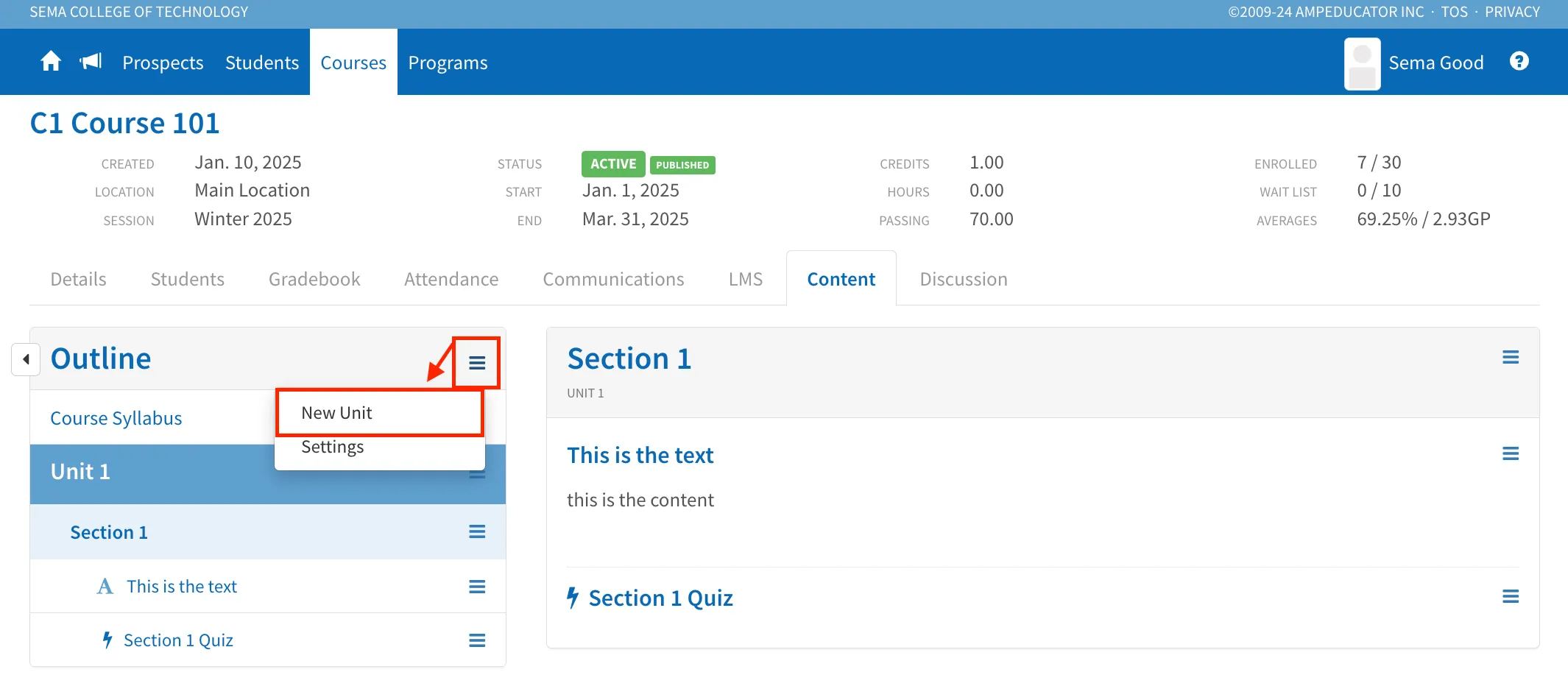
To create a new unit, click the dropdown menu next to Outline and select New Unit.
Then, enter a name for the unit and provide a description if necessary.
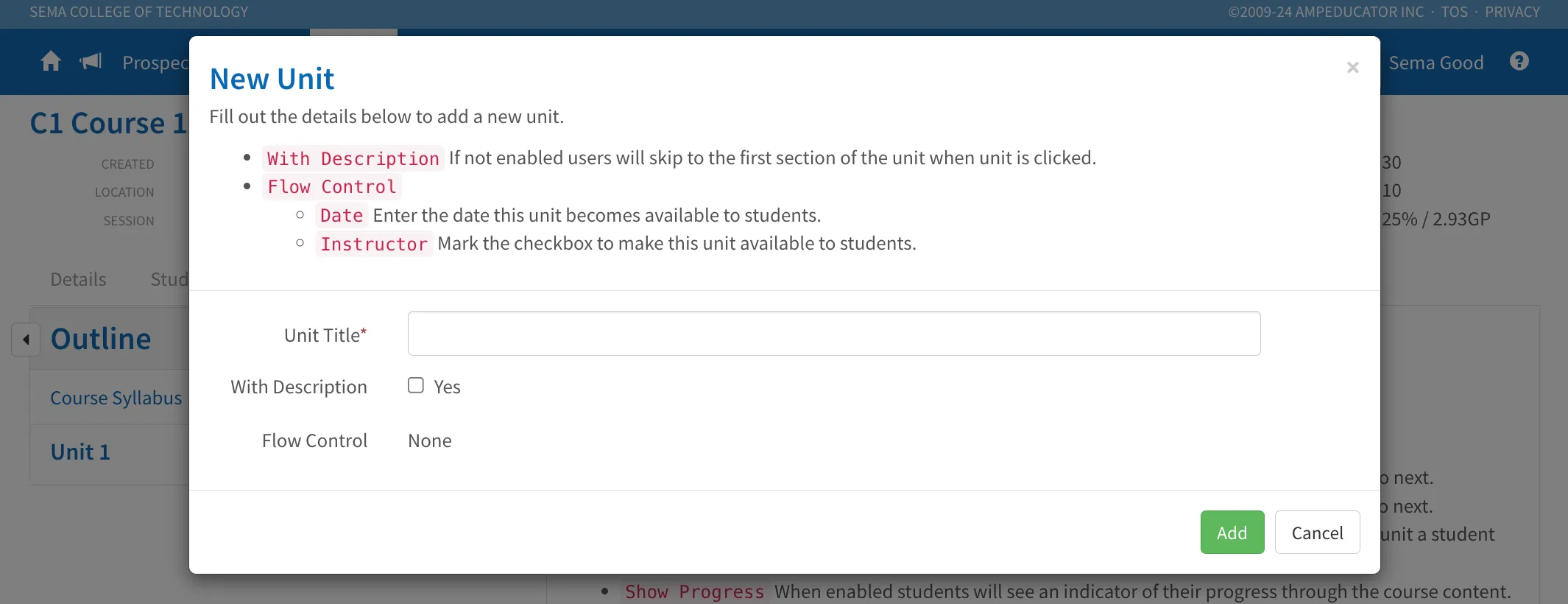
If you have enabled flow control, additional options will appear, allowing you to set how students progress through the content within this unit.
Creating New Sections
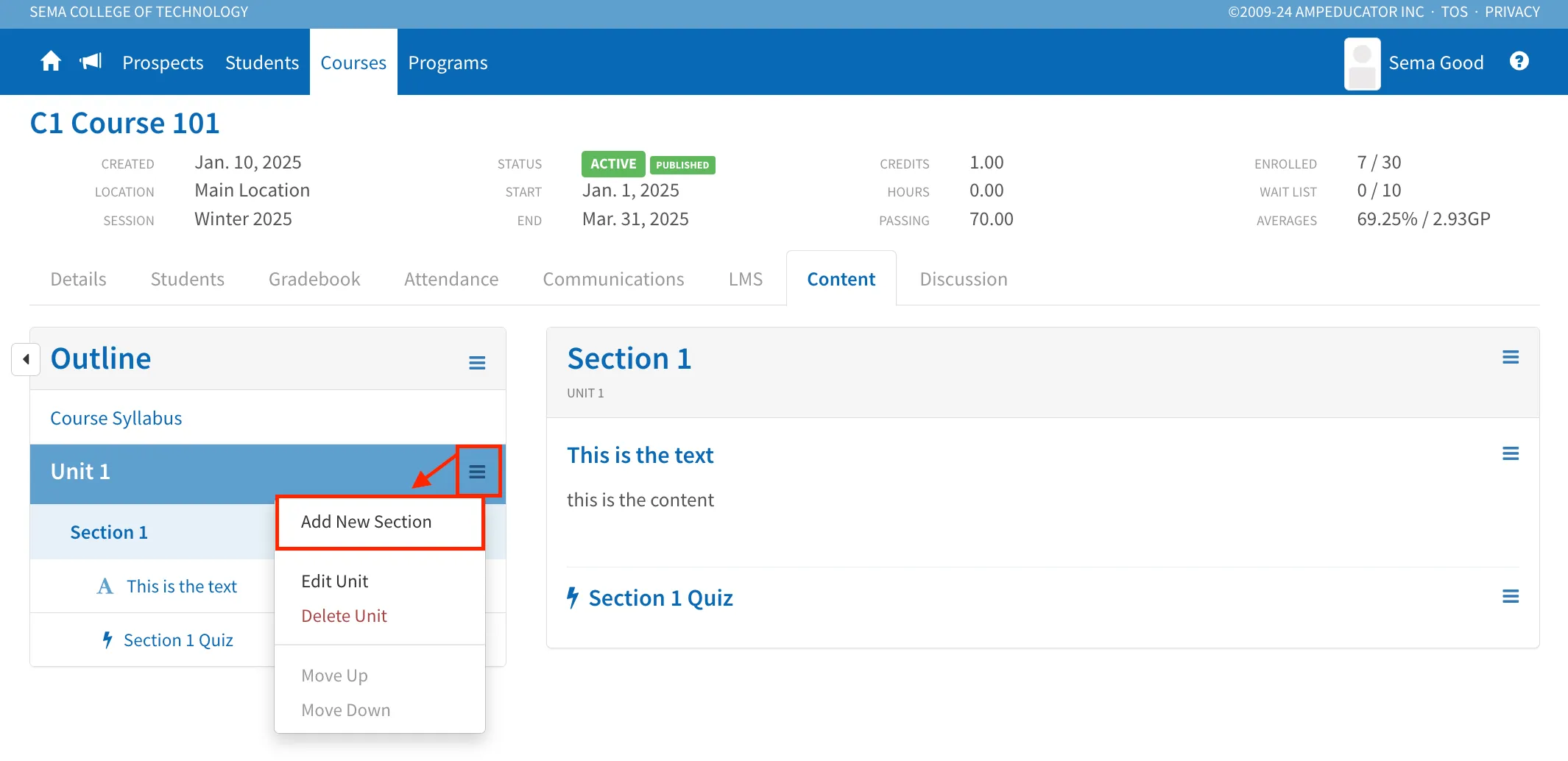
Once you've created a unit, you can easily add sections to it. To do so, click the dropdown menu next to the unit and select Add New Section.
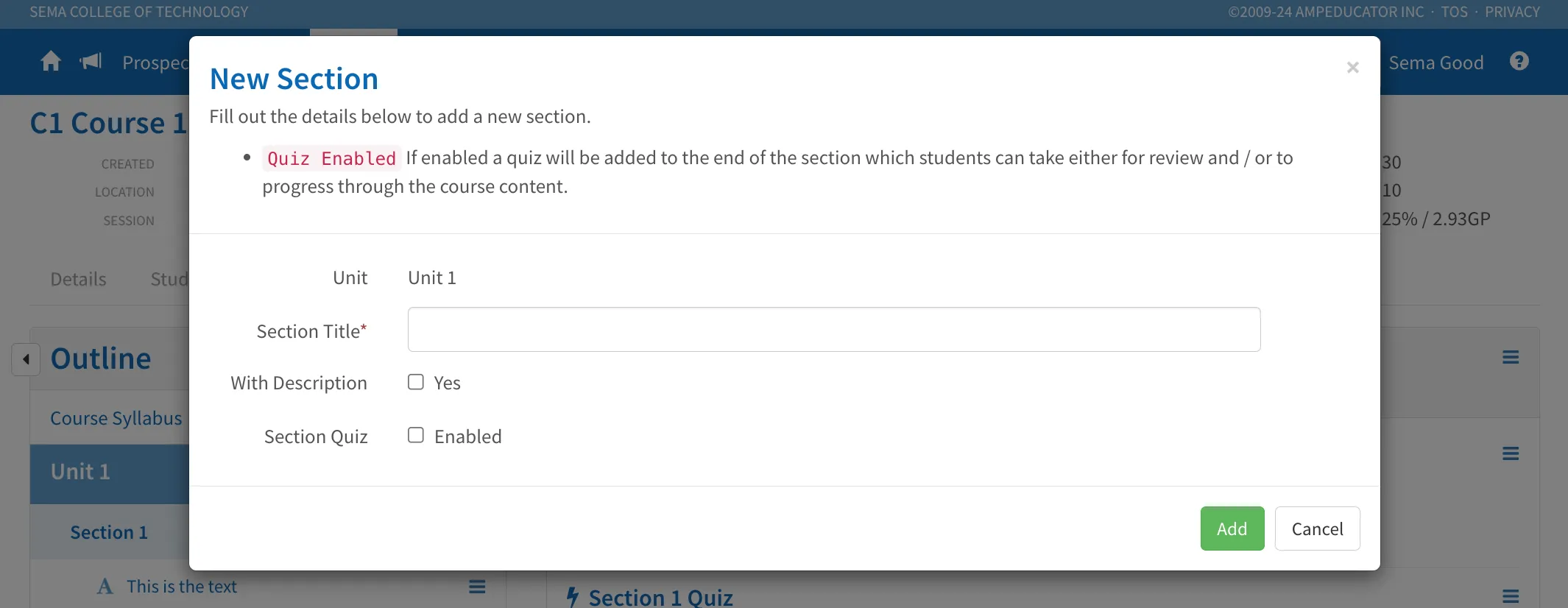
Give the section a title and, if necessary, add a description. You also have the option to enable a quiz for the section; however, you can always add a quiz later if preferred.
Adding Content Items
Once your sections are set up, you can add different types of content items directly into the course. To do this, click the dropdown menu next to the section title and select the item type you want to add. Each type has its own customization options.
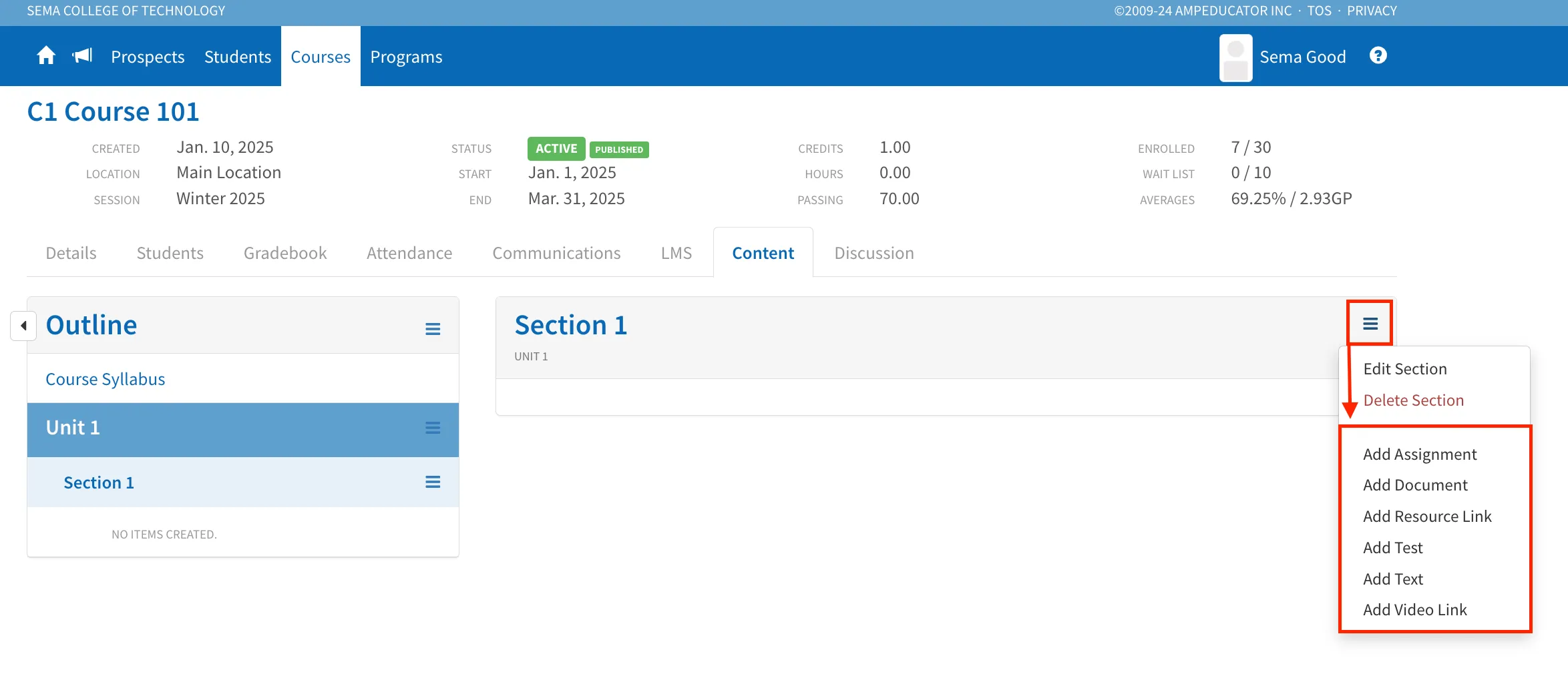
Add Assignment
You can add Assignments directly into the Content tab. This makes them part of the overall course flow, so students see them alongside other materials. Assignments must already be linked in the course grading schema to appear in the list. If you haven’t done this yet, see Courses / Course Details / Grading Schema to link them first.
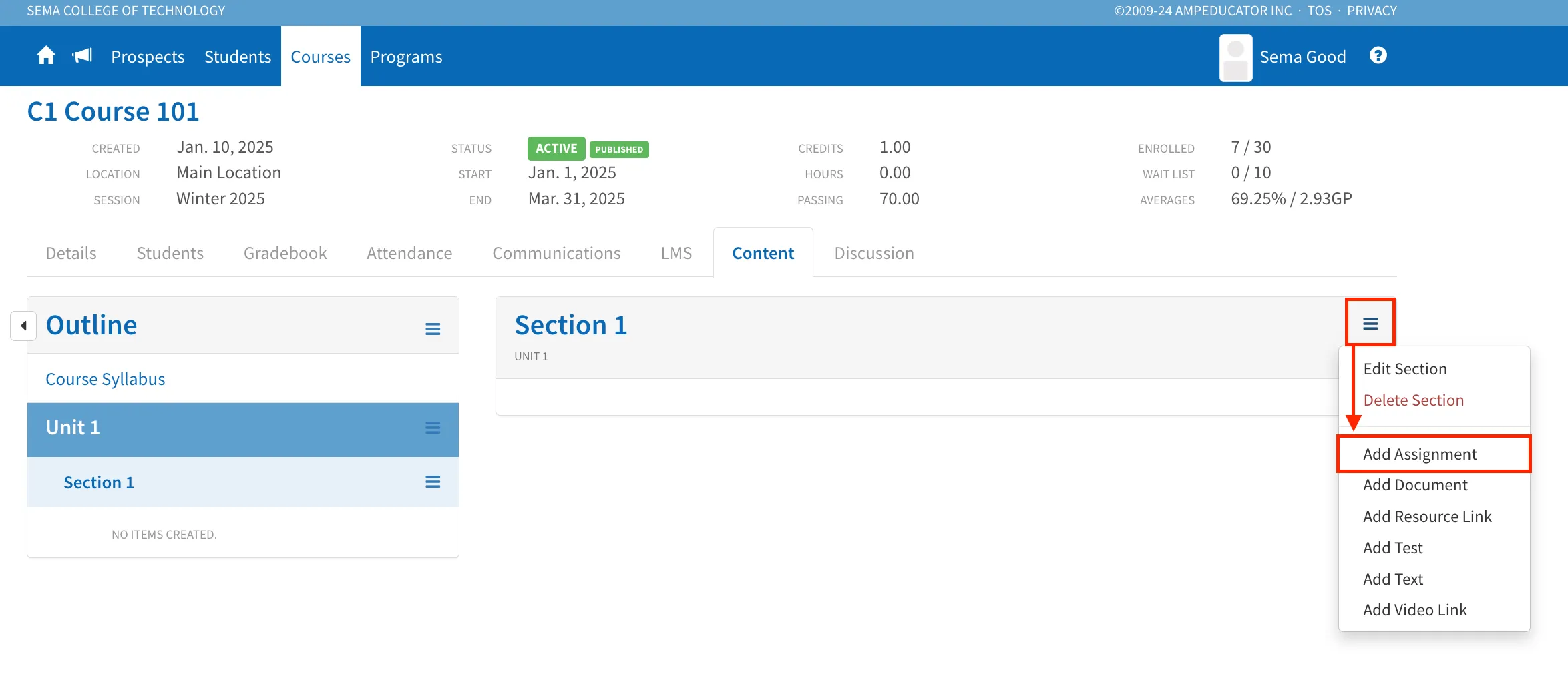
To add an Assignment, open the dropdown menu next to the section title and select Add Assignment.
In the New Item window, choose the Assignment type and select the Assignment from the Item Assignment dropdown. If you want the item to be considered complete once it’s submitted, check the Submission Only option. Otherwise, the item will be marked complete when the Assignment is graded with a passing mark.
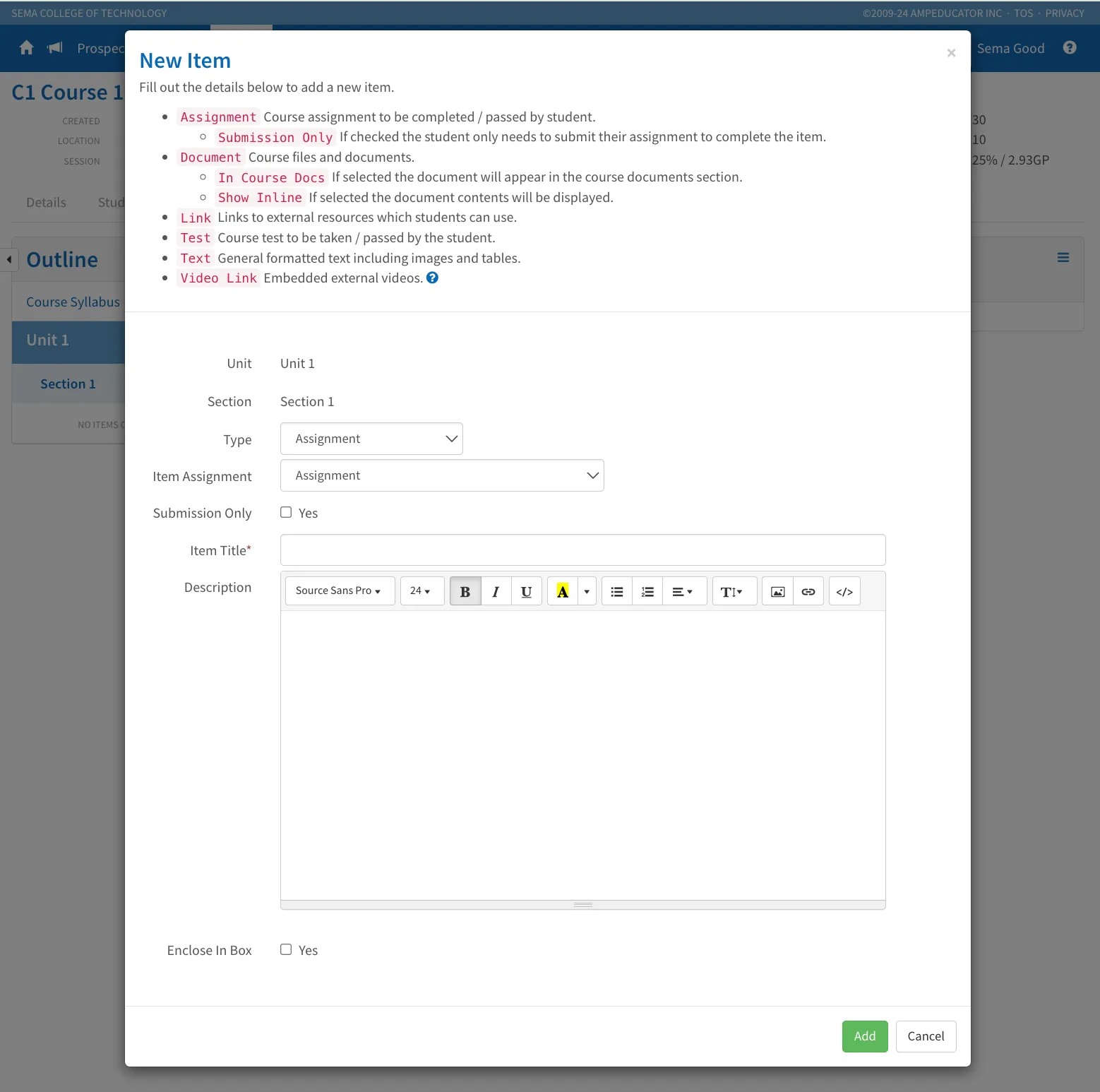
Enter an Item Title and an optional Description. You can also check Enclose In Box to visually separate the item in the content list. When finished, click Add. The Assignment will now appear in the course content.
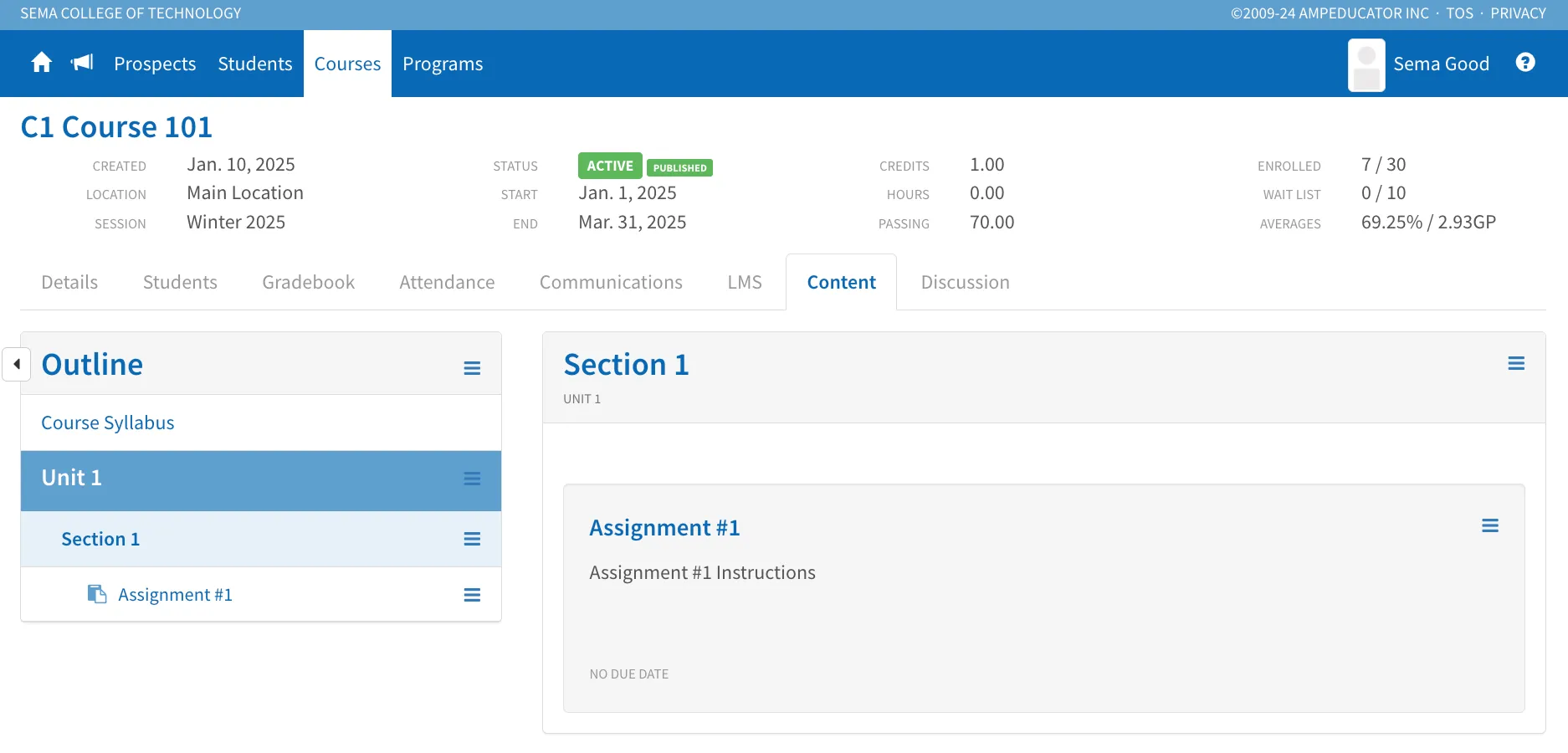
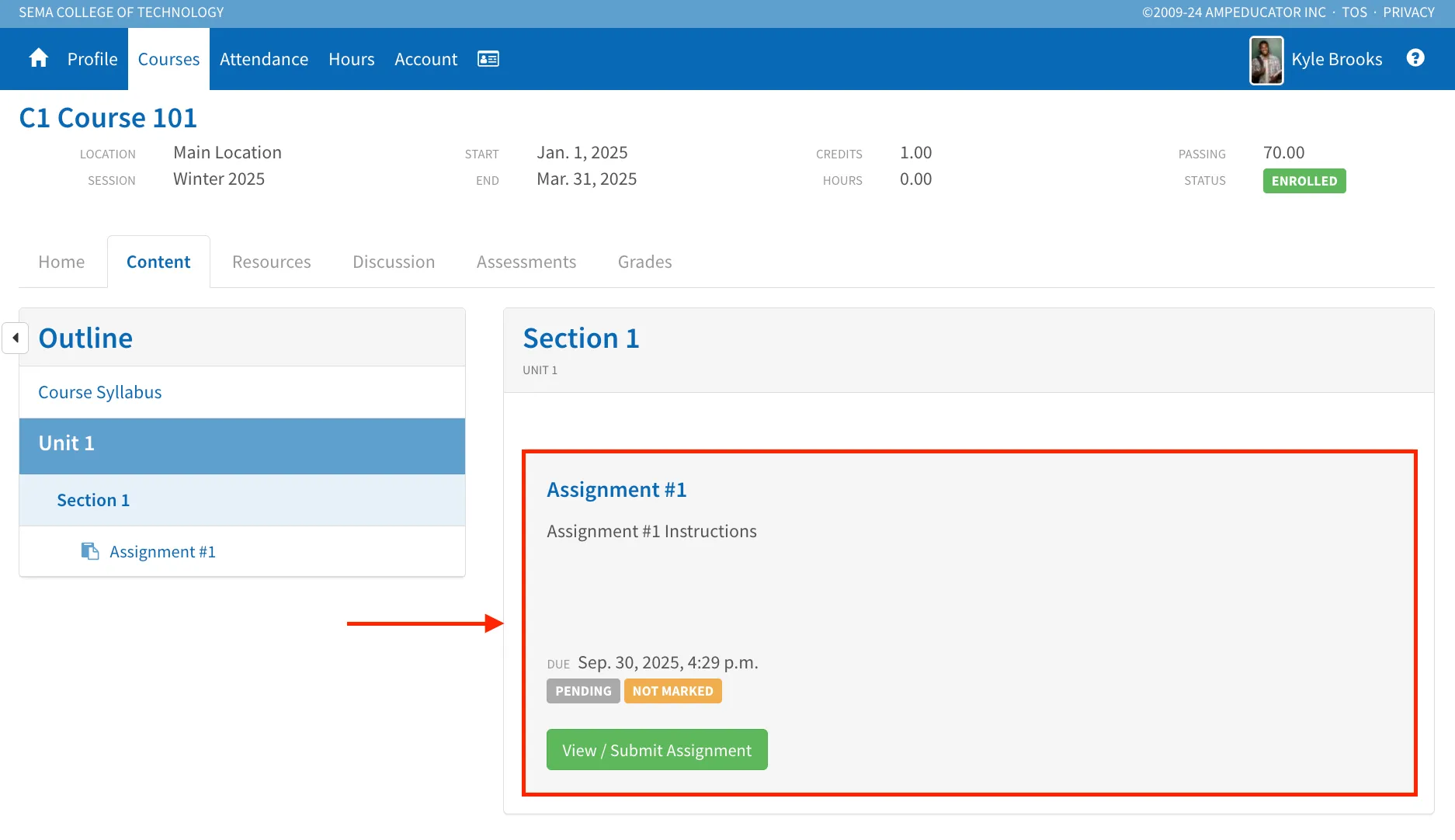
In the Student Portal, students will see a Submit Assignment button in the Content tab. Once they submit and the Assignment is graded (or if Submission Only is enabled, once it’s submitted), the item will be marked complete.
Add Document
Documents allow you to upload files that students can download or view inline. You can also make them available in the LMS / Course Documents section.
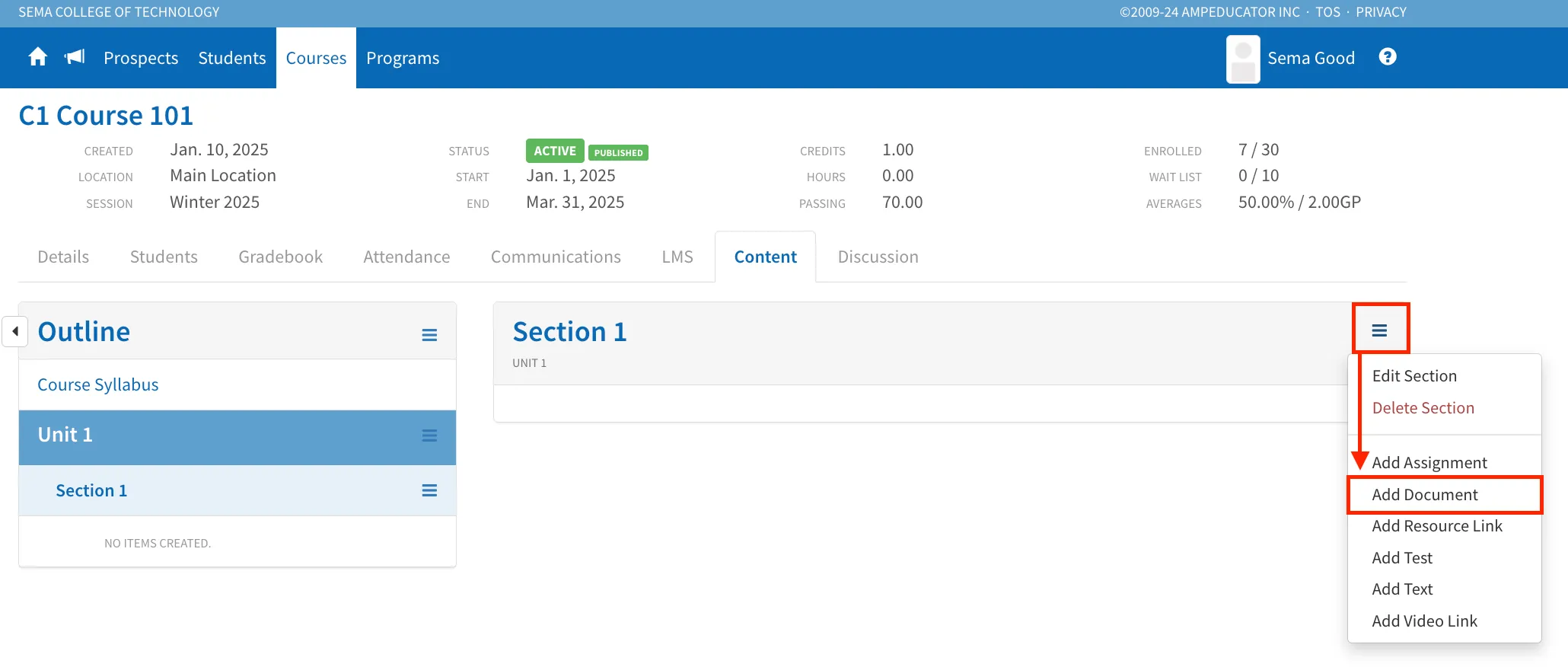
To add a document, open the dropdown menu next to the section title and select Add Document.
In the New Item window, click Choose File to upload the document. Enter an Item Title and an optional Description to help students understand the file’s purpose.
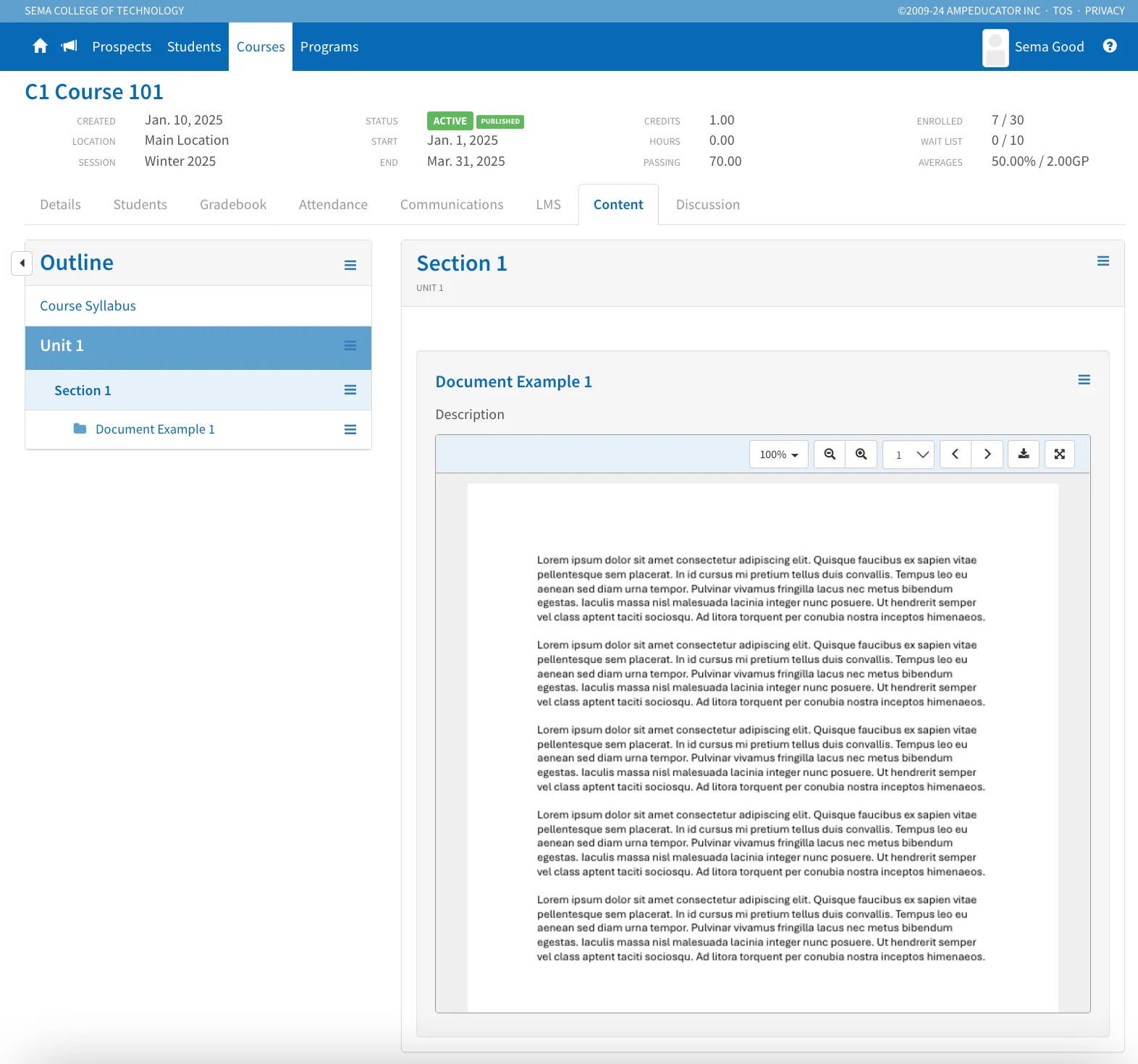
You can choose In Course Docs if you want the file to also appear in the Course Documents section. Select Show Inline if you want the file contents displayed directly in the content area instead of only as a downloadable link.
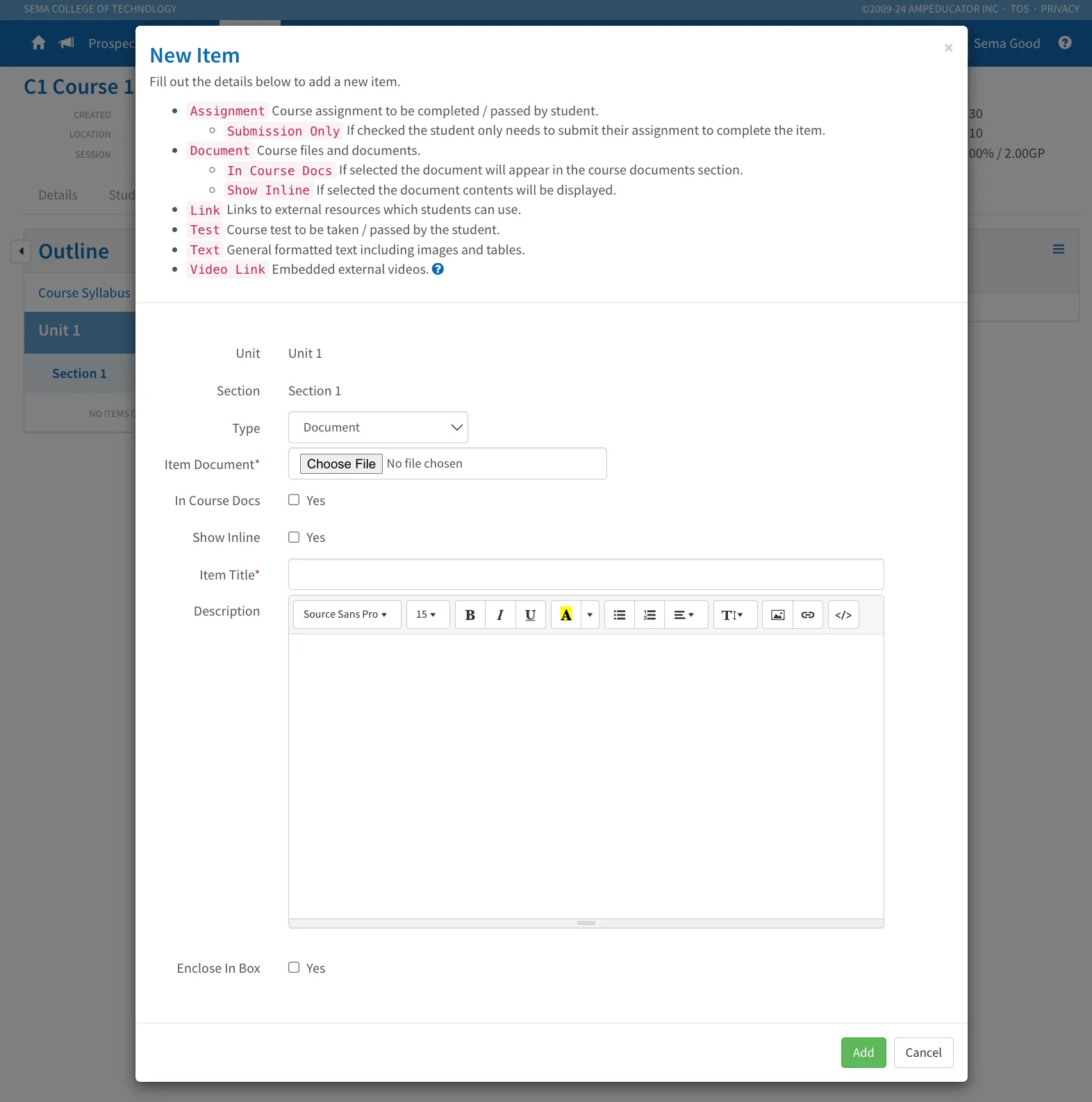
As with other items, you can check Enclose In Box to visually separate the document in the content list. When finished, click Add, and the document will appear in the course content.
Add Test
You can add Tests directly into the Content tab. This makes them part of the overall course flow, so students can access them alongside other materials. Tests must already be linked in the course grading schema to appear in the list. If you haven’t done this yet, see Courses / Course Details / Grading Schema to link them first.
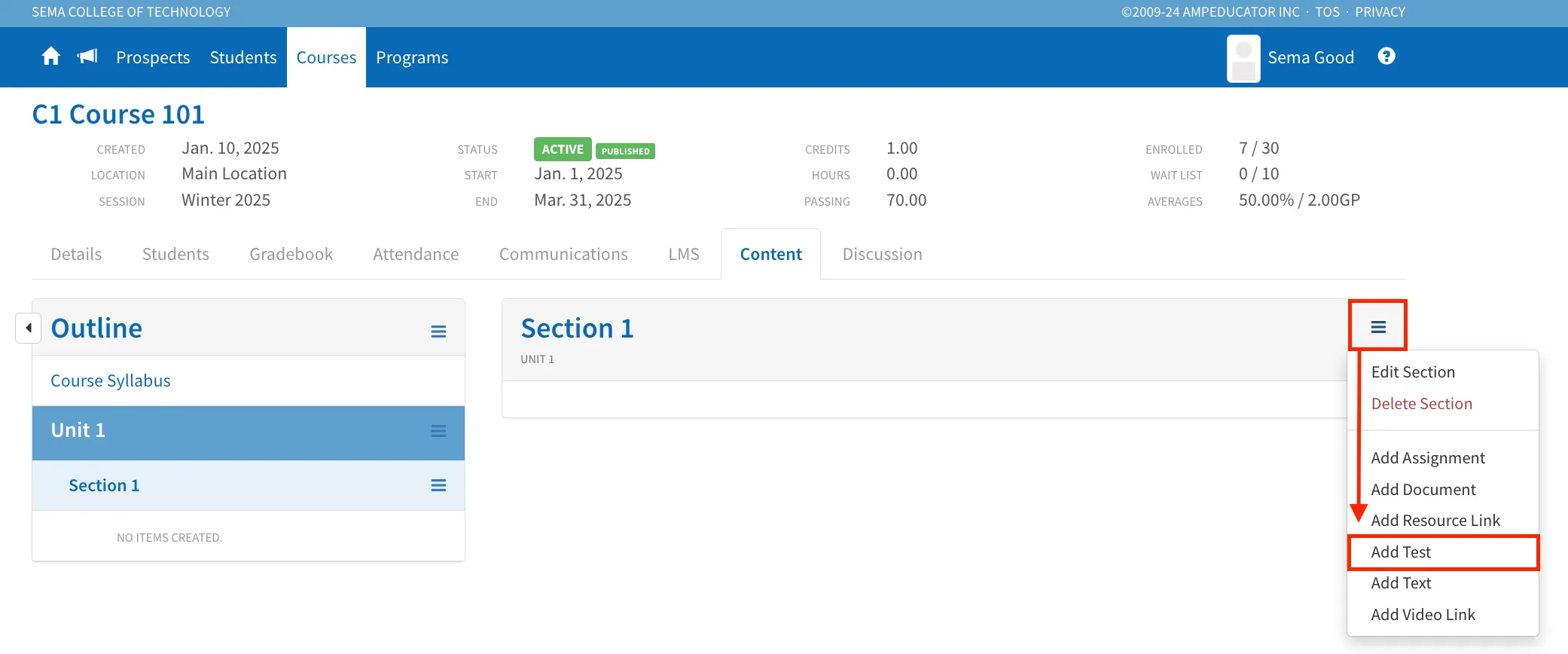
To add a Test, open the dropdown menu next to the section title and select Add Test.
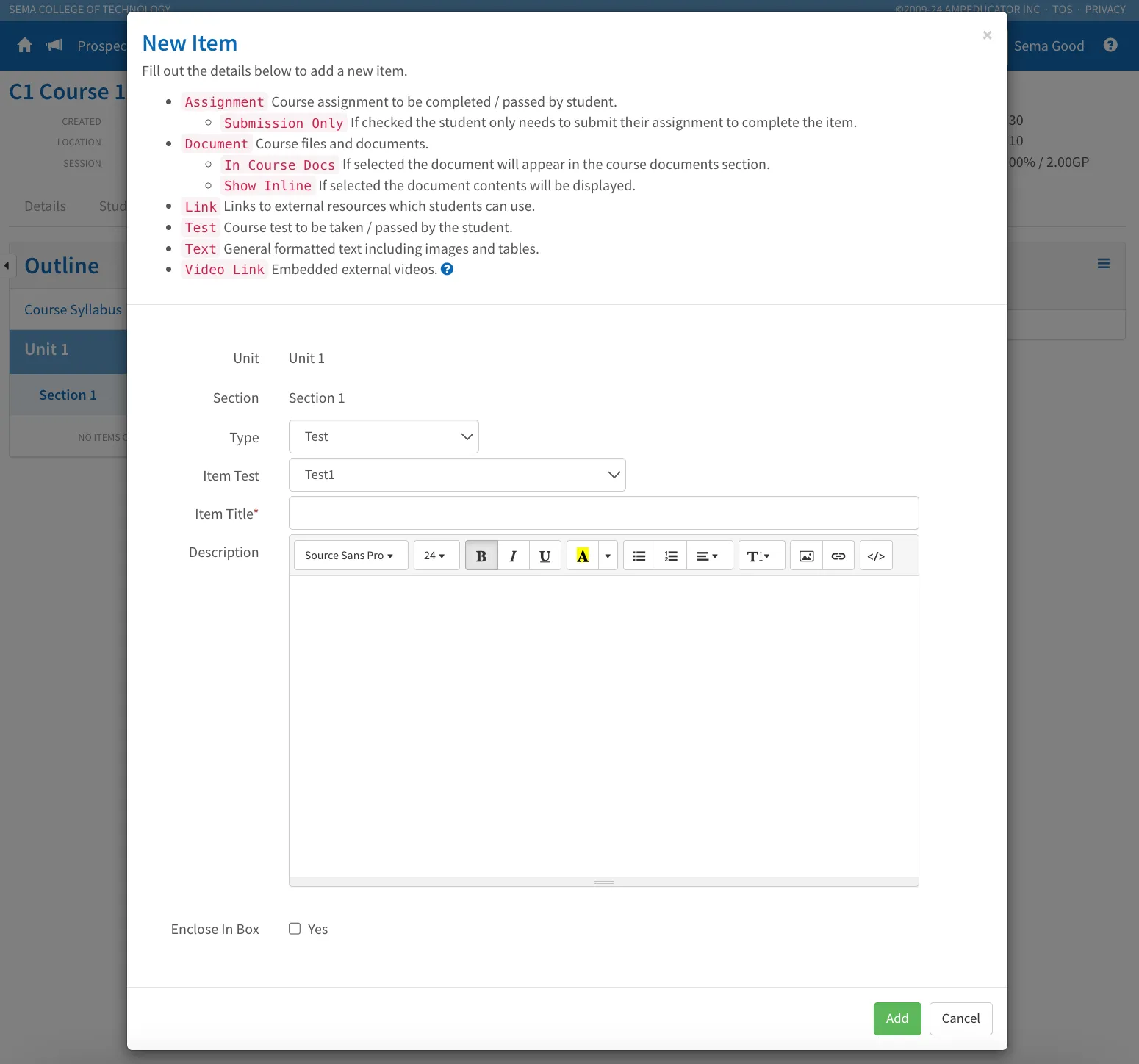
In the New Item window, choose the Test from the Item Test dropdown, then enter an Item Title and optional Description. You can also check Enclose In Box if you want the Test visually separated in the content list. When finished, click Add.
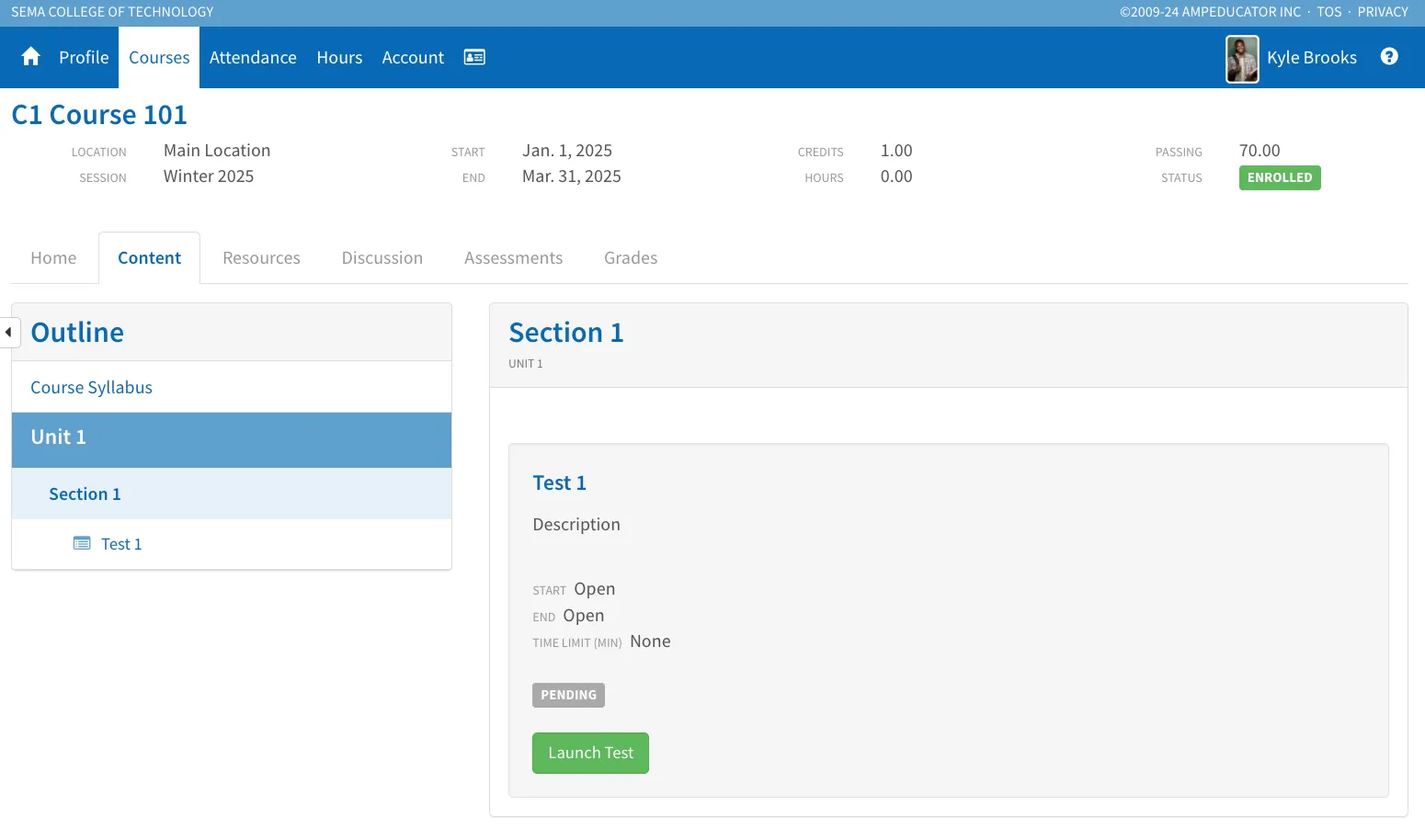
In the Student Portal, Tests display within the Content tab of the course. Students will see the Test name, description, and a Launch Test button. The details shown may vary depending on how the Test is configured, such as start and end dates, time limits, or security settings. Once the Test is marked, the item is counted as complete.
Add Text
You can also add text directly into the Content tab. This can serve as supplemental notes, instructions, or even the main course material itself.
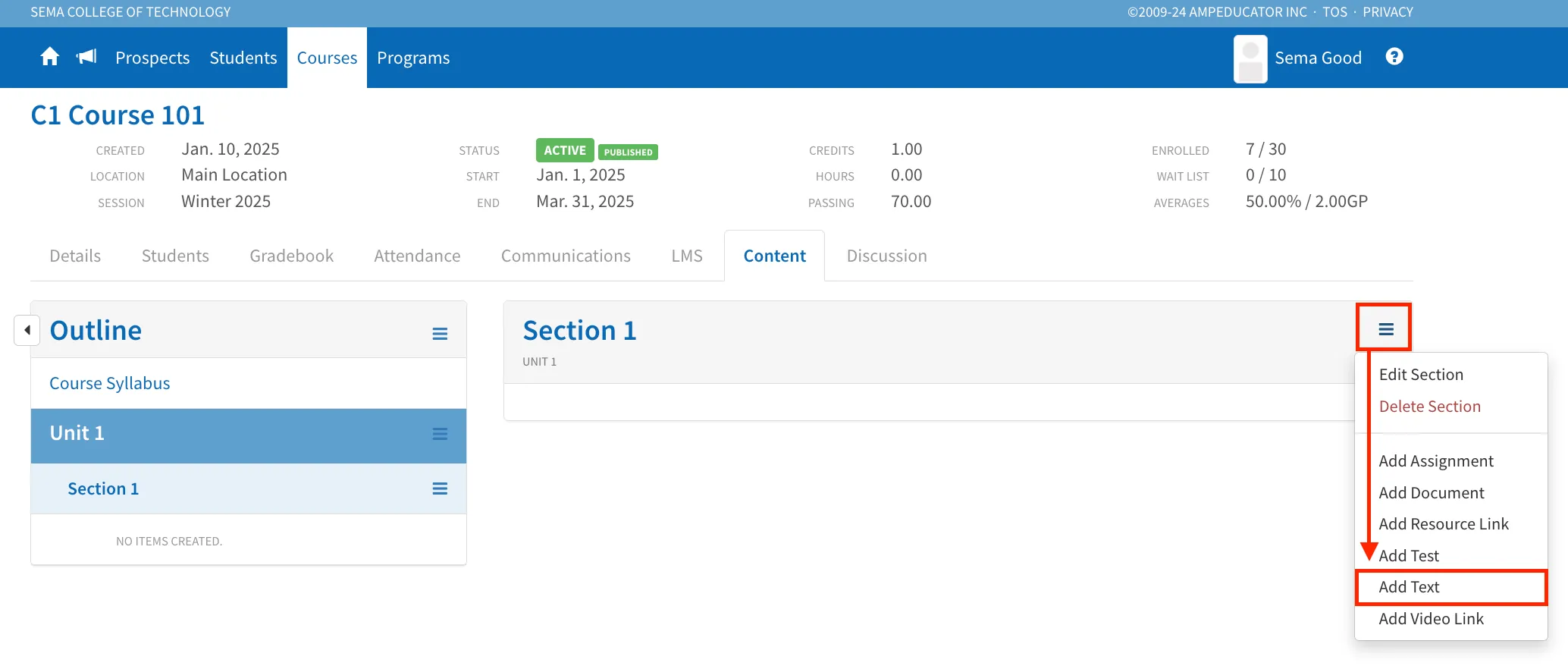
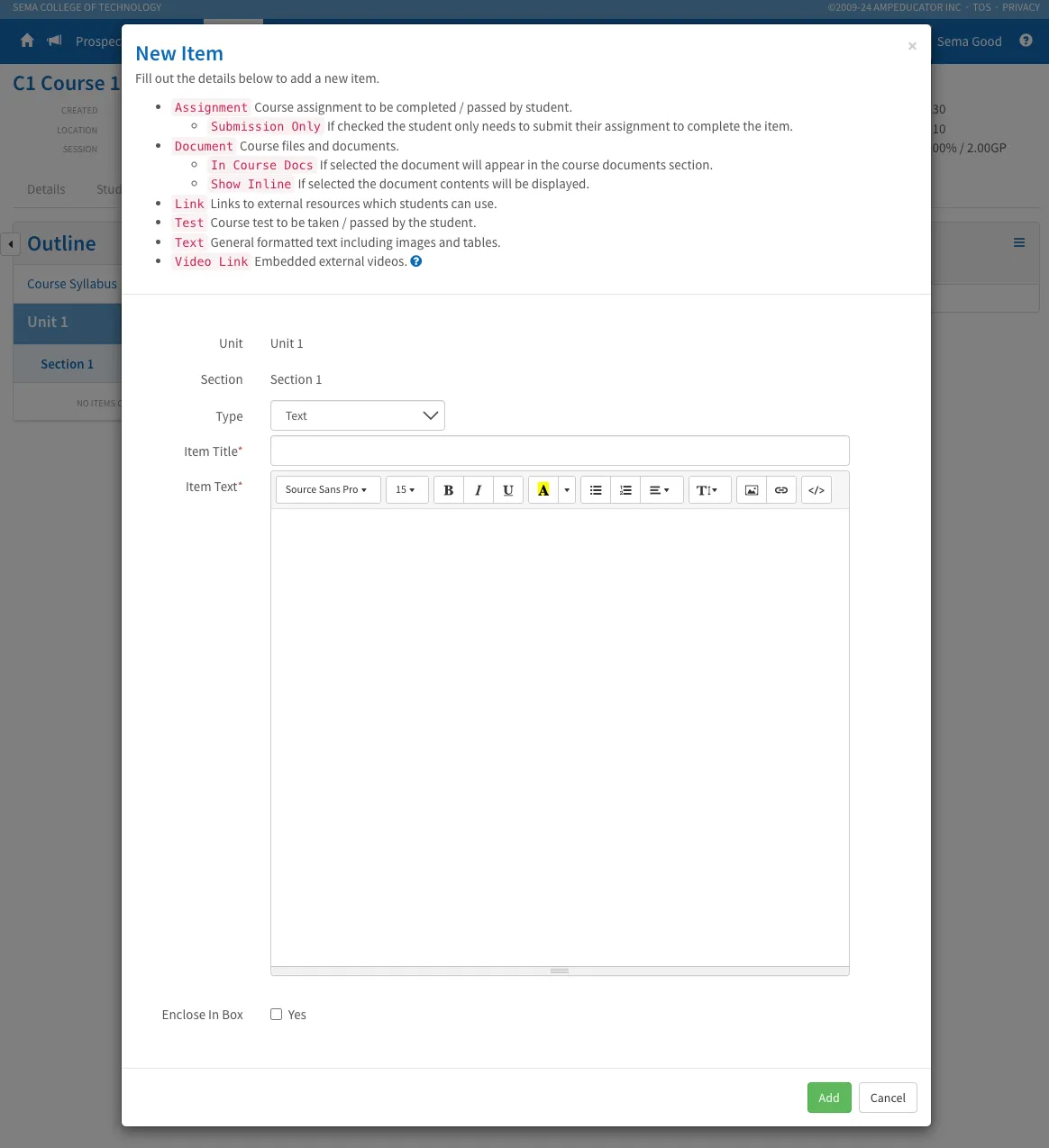
To add text, open the dropdown menu next to the section title and select Add Text.
In the New Item window, enter an Item Title and type your content into the Item Text field. The editor toolbar allows you to format your content, insert links, or add images and tables. Selecting Enclose In Box will display the text in a separate box within the section. When finished, click Add.
If you copy and paste text from another document (like Word or Google Docs), it may keep the original formatting, which can create blocks you can’t edit in the text editor. To avoid this, paste using Ctrl+Shift+V on Windows or Command+Shift+V on Mac. This strips extra formatting so the text stays clean and editable.
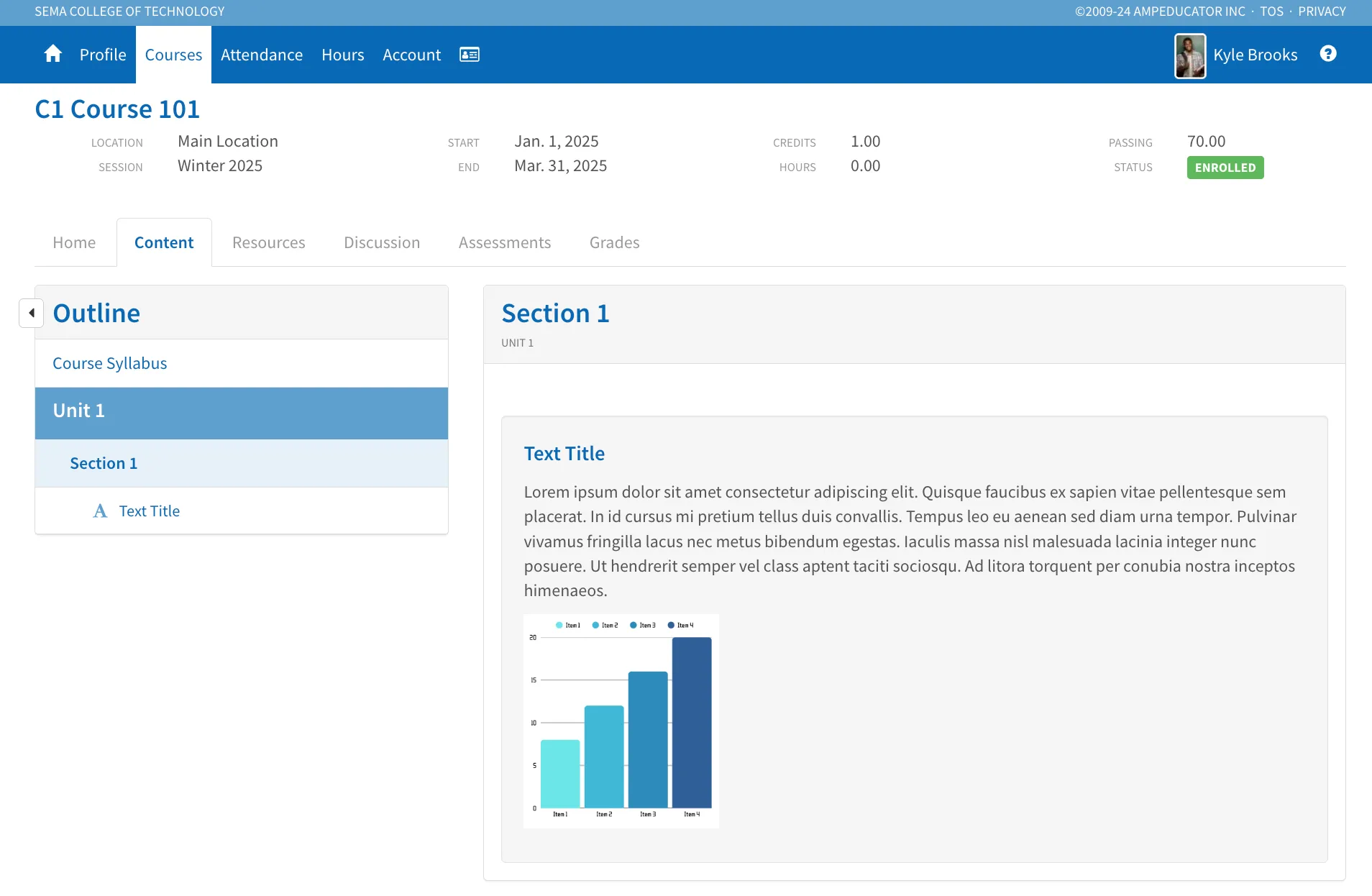
In the Student Portal, the text will appear inline as part of the course content, making it easy to provide lessons, explanations, or important context right where students need it.
Add Video Link
You can embed videos directly into the Content tab to make them part of the course flow. This is useful for lessons, demonstrations, or supplemental material that students need to watch before continuing.
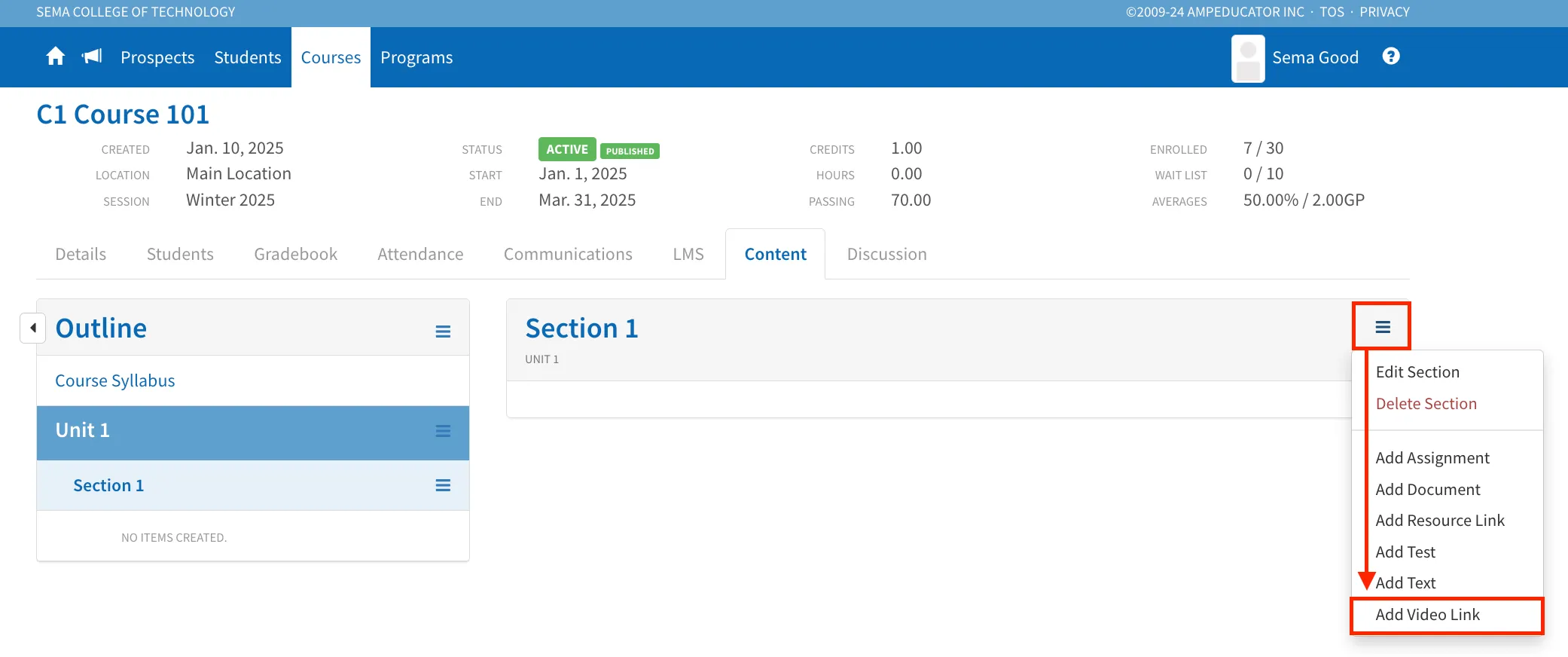
To add a video, open the dropdown menu next to the section title and select Add Video Link.
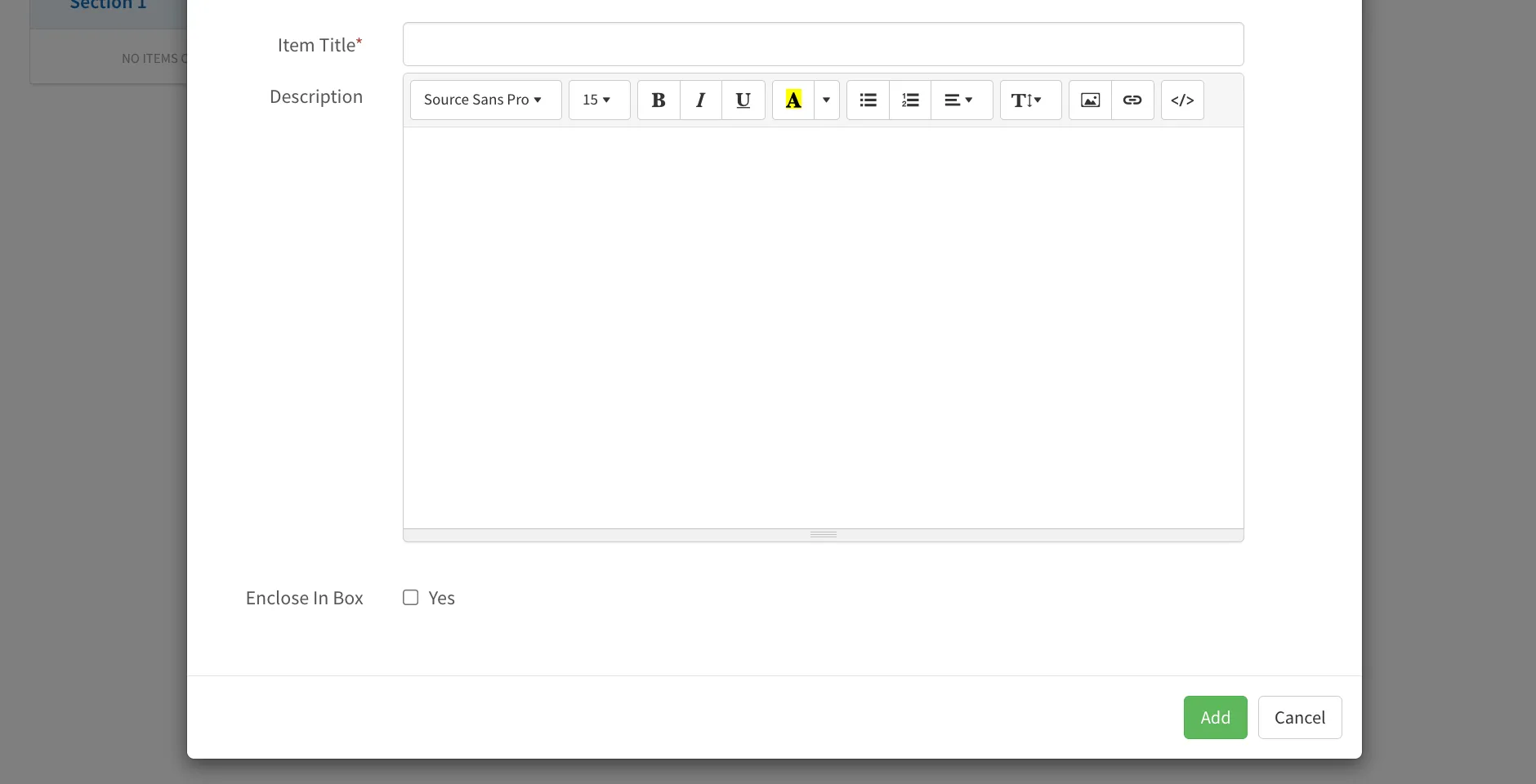
In the New Item window, choose a Video Source (YouTube, Vimeo, or General for other platforms) and paste the Video URL/ID. You can preview the video to confirm it displays correctly.

Then, enter an Item Title and optional Description. Selecting Enclose In Box will display the video in a separate box within the section. When finished, click Add.
In the Student Portal, the video will appear embedded directly in the Content tab of the course. This allows students to watch it without leaving the portal, ensuring the video is part of their overall course progress.
